
In anticipation for my upcoming Denmark travel series, I wanted to share my list of the best Danish food (and drinks) to try when you visit Denmark– or, at least, have access to a Danish restaurant. Given that Danish cuisine is quite hard to find outside of the country, as well as the fact that it borrows many dishes from its nearby German and Scandinavian neighbors, it’s very much a challenge. All the same, a delicious one!
Danish cuisine is a complex one, heavily-influenced by its climate and geography. Denmark is part of Scandinavia and therefore is subjected to pleasant summers and chilling winters, giving rise to berry desserts and hearty meat dishes, respectively. The country also has easy access to both the North and Baltic Seas, which offer a plethora of seafood, particularly fish like herring.
There’s also a historic component to Danish food, with major events like the Industrial Revolution contributing to mass agricultural production, including wheat and rye for hefty breads like rye bread. Even Danish pastries (“wienerbrød”) originated from Austria, brought over to Denmark in the mid-19th century and now iconic to the Scandinavian country.
Traditional Danish food is understated, focused on keeping each dish’s ingredient in its truest form, with minimal spice (exception being herbs). While the cuisine might not win awards in bold and punchy flavors, there’s a beauty in its simplicity, to savor and enjoy each element in the dish and feel nourished in the end. It might not be for everyone, but regardless is worth trying!
Here are some must-try Danish food that I hope you get to have some day. Velbekomme!
Top 10 Danish Dishes You Need to Try
1. Smørrebrød
 Fried fish smørrebrød
Literally translated as “butter and bread” in Danish, smørrebrød is a staple of everyday meals in Denmark, often taken for lunch. It’s an open-faced sandwich that consists of rye bread piled high with toppings like fish, cold cheese, boiled eggs, etc., eaten with a knife and fork. I’ve tried a few types of smørrebrød, and I find it to be quite rich and salty. You’d think an open-faced sandwich wouldn’t fill you up, but I was very full in the end!
2. Stegt flæsk/Flæskesteg
 Flæskesteg sandwich
Considered the national dish of Denmark, stegt flæsk is fried pork belly that’s also served with potatoes and parsley sauce. It’s not to be confused with flæskesteg, which is roasted pork with cracklings– either way, it’s pork! Personally, I’ve only had flæskesteg before, in sandwich form, as it’s a popular street food for its convenience on-the-go. It is tasty, but definitely not for vegetarians!
3. Gule ærter
 Chilled gule ærter
Gule ærter is pea soup, and the recipe dates back to the Bronze Age when peas became a staple for long, cold winters. It’s often served warm, although there are chilled versions which make for a refreshing drink in the warmer months. As I’ve only visited Denmark in the summer thus far, I’ve had chilled gule ærter— while it might not seem like pea soup is flavorful, I actually found it surprisingly so, with herbs like dill adding to the humble dish.
4. Fish
 Smørrebrød with smoked salmon
The majority of Denmark is on a peninsula, thereby having easy access to the sea. Therefore, the Danes eat a lot of seafood, including fish like cod, salmon, and herring. Whether smoked, fried, pickled, or raw, fish is enjoyed throughout the country at just about every meal. I do enjoy fish, although I will admit that certain types like pickled herring are a bit of an acquired taste!
5. Wienerbrød
 All the Danish pastries!
Also known as Danish pastry, wienerbrød translates to “Viennese bread,” as it originated from Viennese pâtissiers who brought their craft to Denmark around 1850. Since then, the Danes have adapted the recipes as their own. Some popular wienerbrød include kringle, a rich, flaky creation topped with icing sugar, and spandauer, a circular, flaky treat with custard or jam in the center (what many outsiders attribute to “Danish pastry”).
6. Carlsberg beer
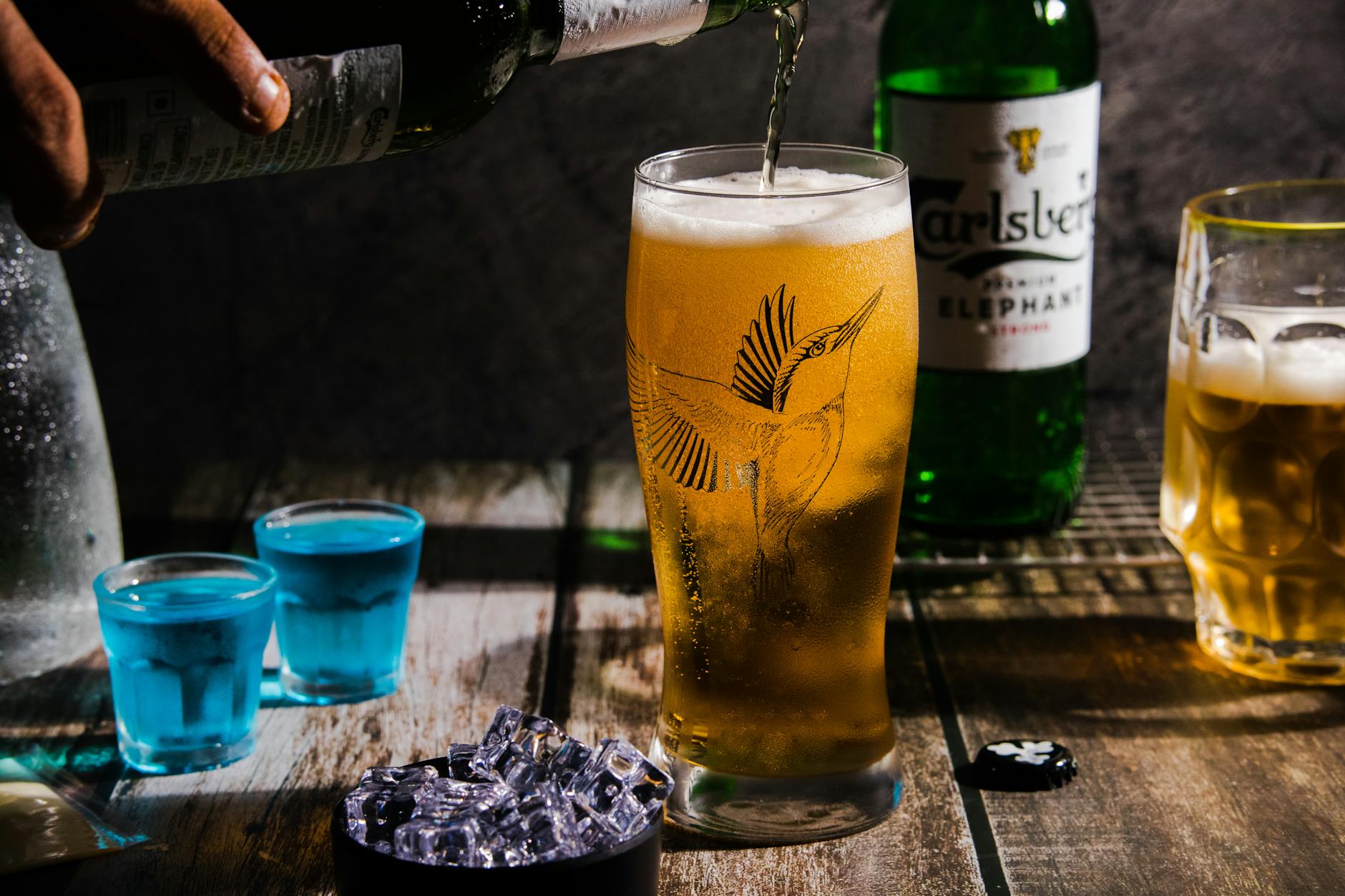
Beer is a common social drink in Denmark, and what better kind to have than Carlsberg? Carlsberg beer dates back to 1847 and today can be found not only in Denmark, but also just about every corner of the world. Although I no longer drink alcohol, I’ve had Carlsberg before, and I found it to be quite hoppy, yet neutral in taste. It goes down easily, which makes for a refreshing beverage during warmer weather.
7. Pølser
 Best thing I had in Denmark
As a street food, pølser reign supreme. These hot dogs can be found sold on every street corner; they make for the perfect quick bite after a night out at the bars and clubs, all the while being one of the cheapest meals you can afford in Denmark. I find pølser elite to the American version, as the sausage is snappier and the toppings (e.g. fried onions and remoulade) add extra savoriness and texture to it all. Now I’m craving a pølser!
8. Æbleskiver
 Taken in Solvang
Æbleskiver are a spherical snack made from fried batter. Although it translates to “apple slices” in Danish, this dish doesn’t actually contain apple. All the same, these are fluffy and sweet, usually served with jam, powdered sugar, and butter. Think of them like pancakes, but circular! I’ve only had æbleskiver in the US, at the historic Danish town of Solvang in central California– and I very much enjoyed it!
9. Elderflower/elderberries
 Elderflower panna cotta
Denmark (let alone Scandinavia) flourishes in the summer, and it gives rise to a wide variety of berries. Elderberries are no exception, and they make for delicious jams to be spread onto bread, baked into pies, or paired with yogurt. Elderberries are the product of elderflowers, which are also used in dessert; I enjoyed a tasty elderflower panna cotta while in Copenhagen, and I found it fragrant, sweet, and a bit tart.
10. Whale meat
 Whale meat and blubber
This is a controversial take, but I believe it’s also worth sharing a dish in the Danish territories, particularly the Faroe Islands and Greenland. Historically, whale meat was eaten for survival while in modern times is consumed as a tradition. I sampled whale meat and blubber while visiting the Faroe Islands, and I found it gamey and fishy– it didn’t taste bad at all, and while I wouldn’t go for it again, I’m grateful I got to try it.
Which Danish food would you try? Let me know! Thanks for reading, and have a great day! 🙂
— Rebecca


I’m not sure I could bring myself to try whale meat, but æbleskiver and wienerbrød are right up my street! I’ve a feeling that I’ve had æbleskiver before, but I can’t recall for the life of me where. We have lots of elderberries in our freezer at the moment from some foraging last year, so you’ve given me an idea for what to do with some of them. Thanks for sharing 🙂
LikeLiked by 1 person
Æbleskiver is like a doughnut with jam outside; I haven’t had them in years, but they’re yummy! I think making a panna cotta with elderberries sounds like a good idea, or maybe jam? Hope to see how you use them!
LikeLiked by 1 person
While I was at college, I worked in the Danish Food Centre in Birmingham and learnt to cook a number of Danish dishes.
LikeLiked by 1 person
That’s really cool. Do you remember which Danish dishes you learned to make? Can you still make them today?
LikeLiked by 1 person
Yes and yes
LikeLiked by 1 person
It all looks delicious though perhaps not the whale meat. Otherwise lots of similarities with Finnish cuisine.
LikeLiked by 1 person
Indeed! Although Finland is technically not part of Scandinavia, there’s plenty of overlap in its cuisine with its neighbors!
LikeLiked by 1 person
Exactly, most people think it’s in Scandinavia when it’s actually a Nordic country.
LikeLiked by 1 person
These all look like very tasty dishes, dear Rebecca 🙂 You know, I could travel to Denmark just to sample their famous pastries all day long. I know they also have a delicious dark rye bread that’s similar to the one we make in Latvia. Thanks for sharing, and have a good day 🙂 Aiva xx
LikeLiked by 2 people
Yes! I’ve had rye bread in Latvia when I visited years ago, and I recall it being hearty and substantial; it paired perfectly with some salted butter! Danish cuisine has lots of overlap with other Northern European countries, but delicious, all the same!
LikeLike
This post was very informative as I didn’t know anything about Danish food before 🙂 everything looks yummy as desserts and seafood are my food language. The pea soup didn’t look super inviting but I’d give it a try especially after your review, same for the whale meat. Thanks for sharing!!
LikeLiked by 1 person
You can’t go wrong with seafood and desserts! I didn’t think I’d like pea soup, but having had it in Denmark, I quite like it! It’s a bit starchy, a bit earthy, and herbaceous. Whale meat isn’t for everyone, but if you have the opportunity to try it, it’s worth a go. Thanks for reading, Elle!
LikeLiked by 1 person
All these are new to me, except for Carlsberg and the pastries 😀 I think I will be keen to try the smørrebrød.
LikeLiked by 1 person
Smørrebrød is an acquired taste: if you like rye bread and seafood, it’s worth a taste!
LikeLiked by 1 person
Admittedly, Danish cuisine never pops into my head when I think of the world’s most delicious dishes — although I am aware that Copenhagen is home to some really highly-acclaimed restaurants. But the list you compiled will certainly come handy for anyone planning to visit Denmark or is just curious about the food from this country. Enjoy your upcoming trip there!
LikeLiked by 1 person
Yes, Copenhagen is home to some incredible restaurants, including NOMA! Danish cuisine isn’t world-renown, but it’s its simple, yet natural flavors which make it a tasty experience. Thanks for reading, Bama, and my Denmark posts are coming in June!
LikeLiked by 1 person
Those pastries would be a daily staple for me! I think the polser would be a staple quick lunch for me there, they do look supreme to our hot dogs here. Looking forward to reading about your trip!
LikeLiked by 1 person
Danish pastries are delicious, and I could go for a cardamom bun now. Polser is yummy, too, and the ultimate savory little meal! My Denmark posts will commence in June, so stay tuned!
LikeLike
I’d try the whale meat and blubber since I’m curious. I’ve had æbleskiver (also in Solvang!) and my daughter said she liked the cardamom buns when she was in Copenhagen. Sounds like it’s a good Danish pastry for me to try someday. Thanks for this list, Rebecca!
LikeLiked by 1 person
Yes! I had æbleskiver in Solvang, too, but not in Denmark itself. Danish pastries are delicious, and now you say that, I’m craving a cardamom bun now! Thanks for reading, Darlene!
LikeLiked by 1 person
Great list, Rebecca. We’re in Helsinki at the moment and are noticing some similarities.
LikeLiked by 1 person
Indeed! Technically, Finland isn’t part of Scandinavia, but I agree that it shares many common dishes with its neighbors. Enjoy your stay!
LikeLiked by 1 person
Yes, that’s true, but they do share many similarities.
LikeLiked by 1 person
Danish pastries for sure. And those kind of pancakes too and berries and that hot dog looks delish
LikeLiked by 1 person
All are very delish! Honestly, I could go for a hot dog right now…thanks for reading, Tanja!
LikeLiked by 1 person
Delicious – I’d also add Kanelsnegle cinnamon buns!! I’m not sure on the whale meat, a lot of places have stopped serving it now and I could never bring myself to try it.
LikeLiked by 1 person
Yum! I could go for a Kanelsnegle as well. Whale meat isn’t easy to acquire, even on the Faroe Islands, and I can understand it being a controversial dish. Thanks for reading, Han!
LikeLike
Without having studied traditional Danish cuisine in any great detail, I would have said that fish was its mainstay. On the streets, the food that’s readily available is actually quite similar to that found in neighbouring countries, such as Germany and the Nordic countries, where fish also features heavily.
LikeLiked by 1 person
Exactly! Fish is a huge part of Scandinavian, let alone Northern European, culture. Especially if you like fish, it’s all very delicious!
LikeLiked by 1 person
Mmm… is it time for lunch yet?
LikeLiked by 1 person
Almost, haha! I could go for a Danish hot dog right now 🙂
LikeLiked by 1 person
Looks like I have not written the comment yet I had in mind. The only information I have on Danish food is a couple hundred years out of date, from the movie Babette’s Feast. What she cooked for the ladies from the extreme religious sect daily was soups with no spice. That doesn’t do Danish food justice I am sure. To me, the split pea soup sounded good. Although whaling is a tradition, I think I would skip the whale meat.
LikeLiked by 1 person
There might not be lots of spice in Danish cuisine, but in place of that, the Danes use a lot of herbs, which make dishes flavorful, too! The split pea soup was a tasty surprise, and I know that whale meat isn’t for everyone. I’ll also talk about the controversies of whaling during my Denmark post, so stay tuned!
LikeLiked by 1 person
Herbs in the soup sounds nice.
LikeLiked by 1 person
Denmark is on our travel list so I found this article interesting. I love fish so I think I will be well catered for 😊
LikeLiked by 1 person
Yes! I hope you can go to Denmark sooner than later. Helps that you enjoy fish, as much of Scandinavian cuisine includes it!
LikeLike
I haven’t had much Danish food and this post is a really interesting to read. The Flæskesteg sandwich you had there looks massive – it looks like a burger to me! Then again, sometimes the terms sandwich and burger are synonymous. This Danish pastries look fantastic, and wienerbrød seems to be something adapted around the world like the ones you see in supermarkets being called ‘Danish pastries’. Which can taste great but guessing you probably saw more variety in Denmark. The pølser looks fantastic! It is loaded. I am not sure about whale meat but good on you for giving it a go! 🙂
LikeLiked by 1 person
Yes, there’s lots of Danish food to try in the country (and wherever there’s a Danish restaurant near you)! I especially love polser, and honestly, I’m craving one now, haha!
LikeLiked by 1 person
A solid overview of a national cuisine people probably don’t know much about. I have fond memories of Smørrebrød, something that felt impossible to ignore on my visit to Copenhagen many moons ago. Whale… crikey, that would be something to try, even if only once as seems to be the case for you. The Pølser looks like an absolute beast and is so loaded.
LikeLiked by 1 person
Thanks, Leighton! Smørrebrød is everywhere in Denmark and while I found it an acquired taste, I’m glad I tried it! Whale meat is a controversial dish, but a huge part of Faroese culture to give a go. However, pølser was the best thing we ate on our trip, and I could seriously go for another one right now!
LikeLiked by 1 person