Although visited on different days, the towns of Tivoli and Tarquinia were nevertheless covered while in Rome this past holiday break. It was after the third night that my family and I visited the former, and the day after leaving Rome to take our cruise from the port of Civitavecchia for the latter. While both small places to visit, Tivoli and Tarquinia still had the richness in history and architecture to be comparable to the big cities in Italy to see.
Tivoli, Italy
We did a day trip to Tivoli from Rome using a tour bus. We left around 9:00 from Rome and took the 45-minute drive over to Tivoli, where we would spend the morning touring the grounds of Hadrian’s Villa. On the ride over, our tour guide gave us an overview of Tivoli, with it being a popular day-trip destination for visitors to go while staying in Rome. It’s home to two great villas– Hadrian’s Villa and the Villa d’Este— the latter which is situated in the hills of the town. Besides being UNESCO World Heritage Sites, these villas have become inspirations for other ventures by other countries in Europe, including Paris for its Jardin de Tivoli and Copenhagen for its Tivoli Gardens, both of which are to resemble the iconic gardens in the Villa d’Este.
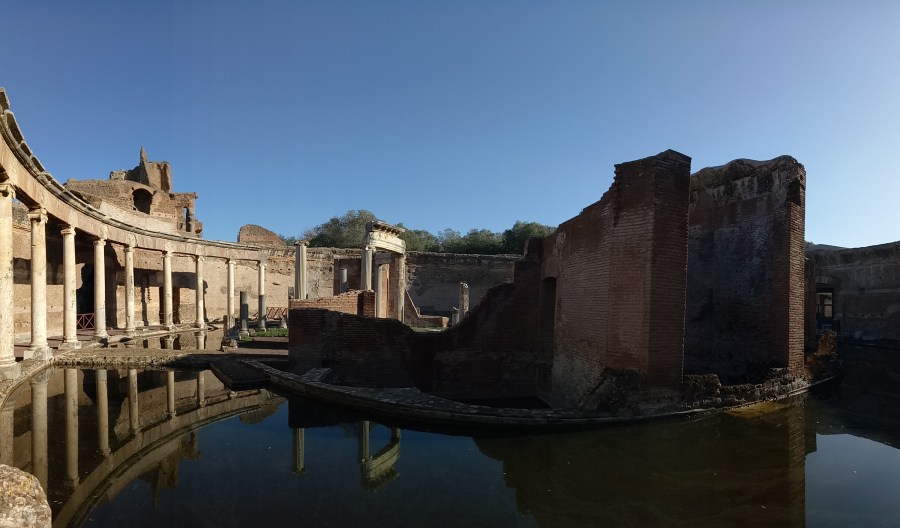
Arriving to Hadrian’s Villa, we explored the archaeological ruins of the once-flourishing estate of the eponymous emperor during the second-century AD. It was difficult to imagine how grand it must’ve been in the past, as our tour guide offered us computer-generated images in a tour book of what it’d looked like back then. Shame that the decline of the Roman Empire saw the decline of the villa itself, but we can still see parts of what it was today.
We toured the Maritime Theater and the Canopus, which I felt were the stand-out sights of the villa, most notably due to its edifice over the water. After a couple of hours of seeing the highlights of the ruins, we left Hadrian’s Villa to take the tour bus to the hills of Tivoli, where we would spend the afternoon visiting the Villa d’Este.

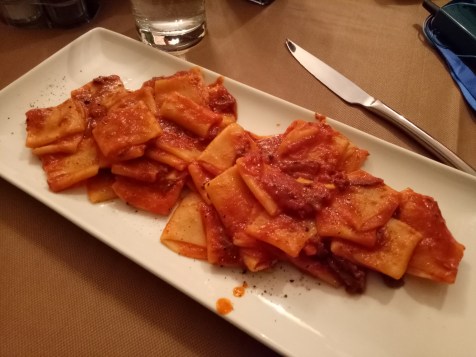
Upon arriving in the newer part of town, we had a lunch break at a tavern that our tour guide recommended us. It was a family-run restaurant, and it served some of the best Italian food I’ve had so far while in Italy. I ordered a pasta dish that had wild boar sauce on top, which had intrigued me– it turned out to be a very-hearty meal, with the pasta being al dente (texture almost similar to that of rice cakes, but I liked it) and the wild boar sauce resembling that of Bolognese, but with a gamier taste to it. After a lovely tiramisu at the end, I was well-satisfied and ready to continue with our second part of the visit in Tivoli that afternoon.
The Villa d’Este is a 16th-century summer residence, having been popular among the eponymous family who had ties to the Borgias back in the day. After changing hands between different noble families, the villa started to experience some decline starting in the 18th to 19th centuries. It wasn’t until the early 20th century that restoration work was put into place, and today the villa remains a beauty to look at, along with its iconic garden with over one hundred fountains, both big and small.
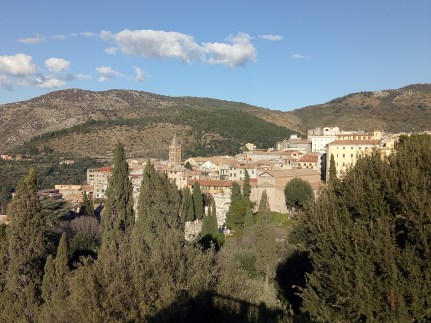
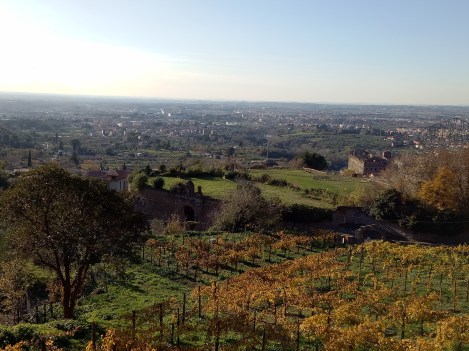
We entered the villa, where we first checked out the terrace for sweeping views of Tivoli from the hillside, along with the still-green vineyards of the Italian countryside– looking even further out, we could even make out the hazy silhouette of St. Peter’s Basilica from all the way near Rome! The views of the green rolling hills were gorgeous, and it took a lot to pry our eyes away from it to continue with our tour.
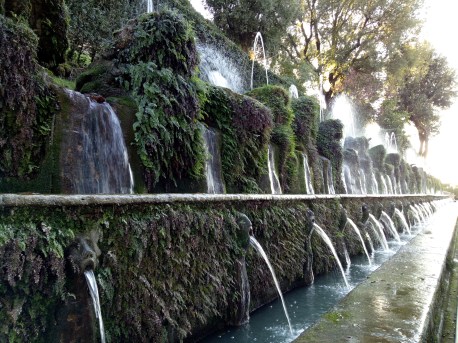
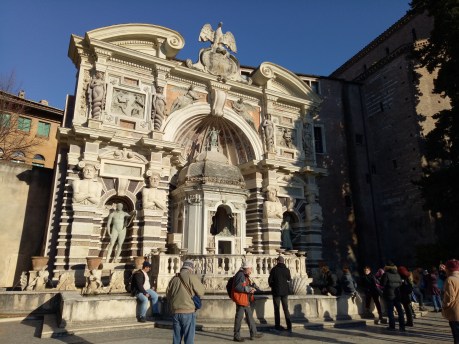
Most of our visit at the Villa d’Este was on the gardens, which were still teeming with growing plants despite the winter season. Strolling along one of the pathways, we admired the one hundred small fountains lining the walls: each had its own distinctive statue, all the while emptying water into a basin which drained downhill in a stream towards the bottom of the villa. We visited the grand Fountain of Neptune, where we happened to arrive on-time to hear the water organ play a short, quaint Renaissance piece– all powered by water! Really fascinating how technology worked back then, for entertainment purpose.
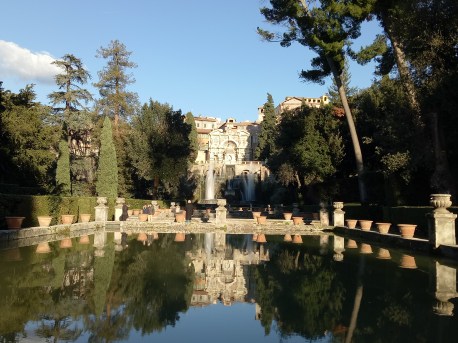
We had some free time afterwards to wander the gardens and take some photos before catching the tour bus back to Rome at 15:00, arriving back around 16:30. Overall, we were fortunate to have visited both villas in Tivoli during winter, as there was almost no one but our tour group– I’m told that it gets packed in the summer, so going off-season certainly has its perks!
Tarquinia, Italy
The day after we’d boarded our cruise in Civitavecchia, we opted to take a half-day tour to Tarquinia, located about 20 minutes from the port. It’d been a tour option organized by our cruise, so we decided to see what the town had in store for us. It’s notable for having been the capital of Etruscan civilization, which had flourished in the Lazio (region of Rome) and Tuscany regions before the Roman Empire.
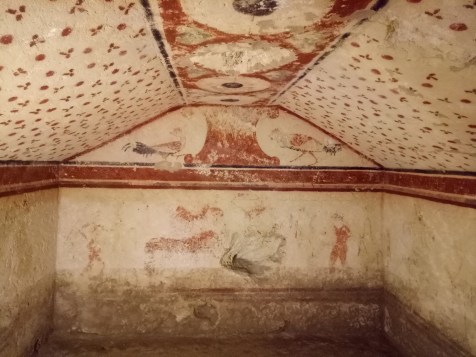
Our first stop was at the Monterozzi necropolis, which houses around 6,000 tombs. Some of them (around 200) contain detailed painted walls, which depicted what Etruscan life was like as early as the seventh century BC. Arriving at the grounds, we came across a few dozen structures that resembled bunkers, but in fact contained the tombs with the walled paintings inside. Not all of them were open to the public, but there was a handful that we could enter to get a glimpse into the art work and culture of the Etruscan people.
Although they were a bit unclear to see due to the frost against the windows, the walled paintings were still quite admirable, as they provided depictions of agriculture, fishing, ceremonies and, in one instance, a scene depicting pornography (“back then,” that is). The colors from the paintings might have faded over the centuries, but restoration has done a pretty good job of bringing back some of its luster.
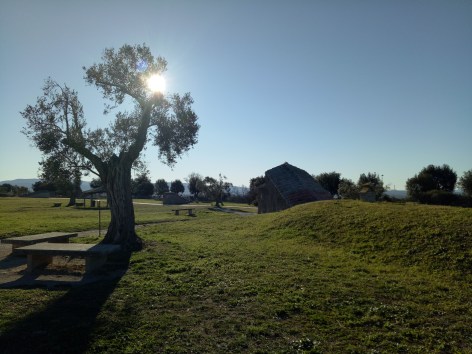

Leaving the necropolis, we headed into the town center of Tarquinia, where we toured its national museum that contained archaeological artifacts, many of which were unearthed at the necropolis itself. We were given free time afterwards to wander Tarquinia, so our family ventured into the older part of town, where we stumbled upon the town’s fortified walls. Climbing on top of it, we were rewarded with lovely views of Tarquinia, along with the sea not too far away. We reconvened around noon, and we took the tour coach back to Civitavecchia, thus ending our half-day visit.
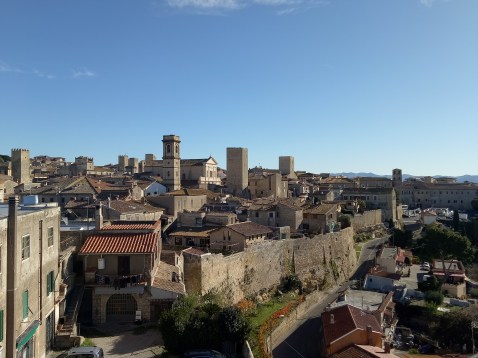
Both visits to Tivoli and Tarquinia were relatively tranquil, but also offered a lot in terms of history, architecture, and beauty. I was glad to have discovered a bit more of the Lazio region in Italy, besides just Rome itself. I was also keen to explore more of Italy, which was exactly what I did during the rest of the holidays.
Next up: Naples, Italy!
— Rebecca

 Rebecca Goes Rendezvous
One thought on “Destination: Tivoli & Tarquinia, Italy”